
Looking for a business phone system can get overwhelming fast. So many options, not enough clear answers, and most of them sound like they were written by a national carrier’s legal team.
We’re here to make it easier.
This guide breaks down the best options for business phone systems in Southeastern Massachusetts, how to pick the right one for your team, and why working with a local provider gives you better support, pricing, and peace of mind.
First, Start with the Basics: The 3 Types of Business Phone Systems in 2026
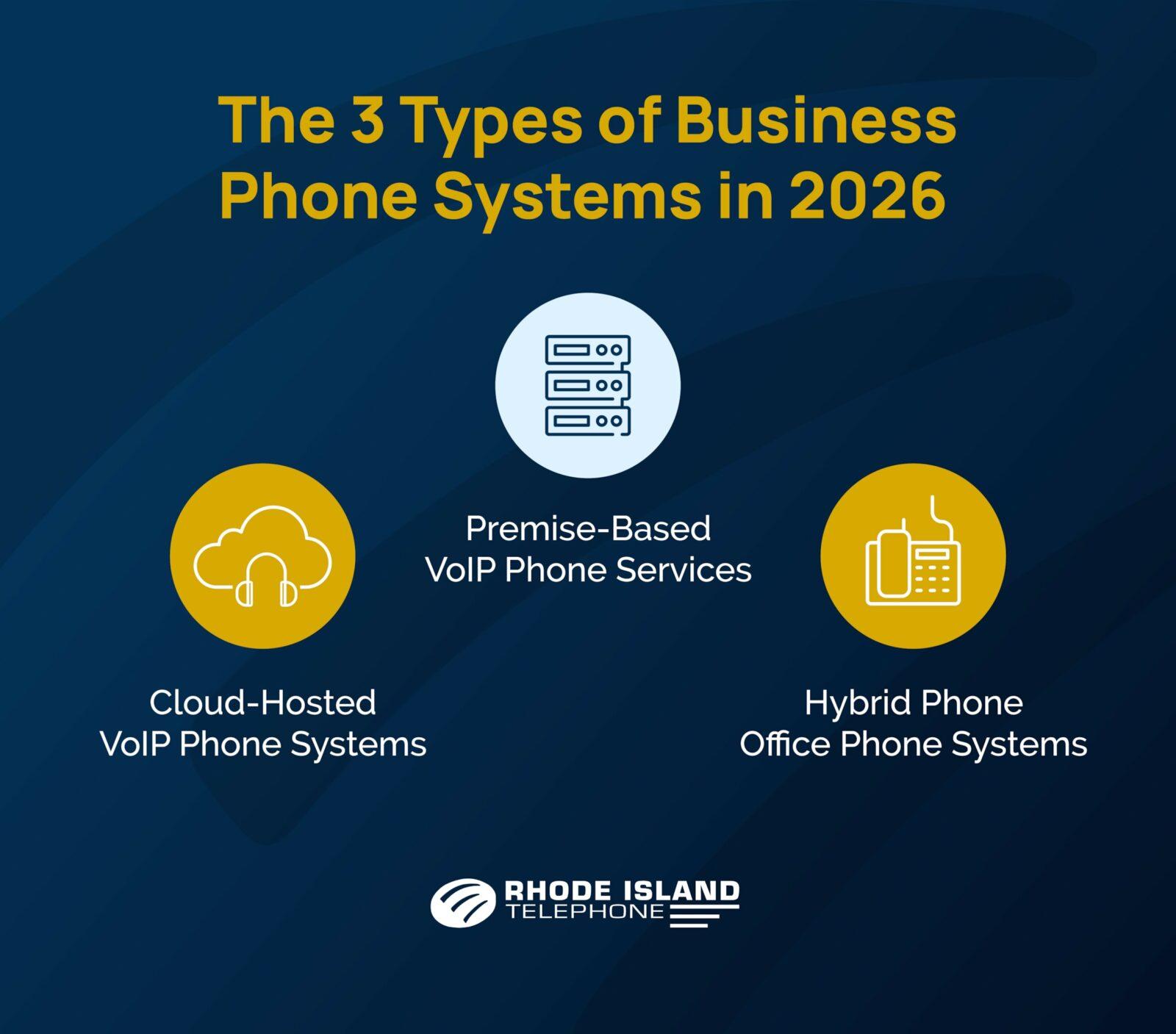
Before comparing features or prices, it helps to understand the only three phone system categories that matter. Every modern setup falls into one of these buckets. Once you know how they work (and who they’re good for), the rest of your decision gets a whole lot easier.
1. Cloud-Hosted VoIP Phone Systems
A Phone System That Works Wherever You Do.
Cloud-hosted VoIP (Voice over Internet Protocol) phone systems live entirely off-site. Your phones and apps connect over the internet to a secure platform managed by a provider that handles everything behind the scenes. There’s no server in the closet, no hardware to babysit, no traditional phone lines to worry about.
Why local businesses like it: Teams here don’t all work under one roof. Staff bounce between home, the office, job sites, and satellite locations. Cloud VoIP keeps everyone reachable on the same system, no matter where they are.
What you get:
- Phones that work anywhere: office, home, mobile
- Point-and-click setup and scaling
- Predictable monthly pricing
- Features like call routing, voicemail-to-email, and mobile apps
- Automatic updates and security patches
Heads up: You’ll want reliable internet service. Most of Southeastern Massachusetts is in good shape on that front, but older mill buildings or shared business parks sometimes need a quick bandwidth check.
Best fit for: Massachusetts businesses with multiple locations, remote or hybrid staff, or anyone replacing an older analog system.
Want to kick the tires on an industry-leading cloud phone system? Check out Cloudworx for yourself.
2. Premise-Based VoIP Phone Services
Perfect for High-Call, High-Stakes Workplaces.
Most people think of VoIP as cloud-based, but it can also operate from equipment right inside your building. With premise-based VoIP, you’re still using internet-based calling, but the server that controls everything (extensions, routing, voicemail) is physically on-site. You own and manage the hardware instead of relying on a cloud provider.
It’s still VoIP, just not hosted. If you’ve ever worried about losing phones during an outage, this setup can feel a lot safer.
Why local businesses pick it: Certain industries can’t afford downtime, like medical, legal, manufacturing, and emergency services. For them, keeping the core hardware on-site adds predictability and control.
What you get:
- Strong reliability during internet interruptions
- Full control over routing, recordings, and system settings
- A great fit for high-volume or regulated environments
- The option to connect via internet or traditional lines
Keep in mind: Upfront costs run higher because you’re buying hardware. Plus, you’ll want a trusted local support team to keep everything tuned and updated.
Best fit for: Businesses with strict compliance requirements, high call volume, or complex workflows.
3. Hybrid Phone Office Phone Systems
A Little Cloud, a Little On-Site, All About What Works.
Hybrid systems mix cloud flexibility with on-site reliability. Maybe your main office keeps the on-premise PBX, but your remote staff uses cloud extensions. Maybe you want local control with cloud failover. Hybrid builds around how your business actually operates.
Why local businesses choose it: Most businesses here aren’t starting from scratch. They’ve got systems that still work, but they want cloud tools for mobility, backup, or future expansion. Hybrid lets you modernize without ripping everything out at once.
How Does All This Work? SIP Trunking
SIP trunking is the piece that connects your existing phone system to the internet. It swaps old copper lines for virtual ones, so you get VoIP-level reliability and features without replacing your hardware right away.
What you get:
- Cloud features where you need them
- Local control where you want it
- Smooth support for remote, mobile, and in-office workers
- A long-term migration path to full cloud (if you want it)
Best fit for: Growing businesses, multi-site operations, companies with PBX equipment they want to keep, or anyone wanting to modernize in stages.
5 Questions to Help You Pick the Right Phone System

What works for a 5-person warehouse in Fall River might not be the right fit for a dental office in Dartmouth. Every setup’s different, which is why the best place to start is by asking the right questions.
1. How many users and locations are we talking?
If your business is small and staying that way, you might not need all the bells and whistles. However, if you’ve got multiple locations or you’re planning on any business growth at all, a hosted VoIP system makes it way easier to expand. Adding users or extensions takes minutes, not site visits.
2. Do you have remote or hybrid workers?
If your team’s bouncing between the office, the job site, and home, you’ll want something that follows them. Cloud-hosted VoIP is great for that! Your team can call, text, or join meetings from their laptop or mobile phone, using the same number no matter where they are.
3. How’s your internet connection?
This one’s big around here. Some areas of Southeastern MA have rock-solid internet. Others. . .not so much.
- If your internet is strong, hosted VoIP is usually the easiest and most flexible option.
- If it’s decent but you want more control, a premise-based VoIP system might be better. It still uses the internet, but all the main equipment stays on-site.
- If your connection is flaky or you want a backup in case of outages, a hybrid setup (with LTE failover or even a few analog lines) adds peace of mind.
If you’d like to explore the impact of business-quality internet on business communications, check out this blog post on the subject!
4. What’s your call volume like?
If your phones are ringing nonstop, features like call queues, ring groups, and call recording can help you stay organized. For high-volume, customer-facing businesses, cloud or hybrid systems tend to offer the best flexibility with features like texting, mobile apps, and real-time call handling.
5. What’s your budget, and how do you want to pay?
Nobody loves talking about the money part, but it matters. Especially when your options include everything from all-inclusive subscriptions to one-time purchases.
- Hosted VoIP solutions spread costs out over a monthly subscription, which includes updates and support.
- Premise-based systems cost more up front, since you’re buying the hardware, but the ongoing costs are lower.
- If you’ve got a traditional system and want to modernize without replacing everything, choosing a hybrid system via SIP trunking can help bridge the gap and lower your bill.
Bottom line: don’t let pricing models box you in. The right setup should fit your business and your budget.
That’s it!
With these questions in your back pocket, you should be able to determine which of the three system types fit your needs best.
Which Advanced Features to Prioritize in 2026 (No Matter Your System Type)
Once you’ve picked the system type (hosted, on-prem, or hybrid), it’s time to think about features. Don’t let a big provider sell you stuff you’ll never use. Take the time to figure out what will make your life easier for your crew and your customers.
Trying to match your needs to feature names? This table should help.
If you want to… | Look for features like… |
|---|---|
Sound more professional when customers call | Call menus (press 1 for this, press 2 for that), custom greetings, voicemail with your branding |
Keep everyone connected across locations | Easy call transfers, shared extensions, phones that work the same in every office |
Let your team work from anywhere | Mobile and desktop apps, voicemail sent to email, texting from your business number |
Handle high call volume without dropping the ball | Call queues, auto-routing when you’re busy, caller info before you pick up |
Train new staff or keep tabs on phone calls | Call recording, live listen-in tools, call history, and usage reports |
Talk quickly between coworkers | Intercom, paging, fast transfers, see who’s available in real time |
Coordinate field crews or off-site employees | Phones that work from mobile, optional GPS tagging, and easy check-ins |
Stay compliant in sensitive industries | Secure call recording, permission settings, and custom call handling (especially with on-site systems) |
Most hosted VoIP and hybrid work phone systems offer these features as part of flexible add-on packages, so you can build seamless communication with custom solutions that fit without paying for features you may not need.

Local Providers vs. National Brands: Which Provider Is Best?
Both options can technically get you a phone system. The real difference is in the experience you get. Here’s how it usually shakes out for Southeastern Massachusetts businesses that choose a local provider like Rhode Island Telephone:
- Unbiased consultations instead of one-size-fits-all sales pitches
- Local technicians who know your area and show up fast
- Support that picks up without long hold times or ticket queues
- Flexible setups that fit how your team actually works
- Clear pricing without surprise add-ons
- Long-term customer relationships instead of rotating support reps
National brands can be fine for basic setups, but most local businesses prefer a partner who’s nearby, easy to reach, and invested in keeping their phones running the way they should.
Done Guessing About Phone Systems? Let’s Make It Easy
Rhode Island Telephone works with businesses all over Southeastern Massachusetts to match the right phone setup to how you actually work. We handle everything to keep your business connected—from helping you choose the system to getting it installed and keeping it running.
Whether you’re in Attleboro, Middleboro, Fall River, or anywhere between, our local techs are just down the road and ready to help.
Request a quote or set up a consult today, and let’s get you a system that actually works for your business.