Quick summary
- A strong nonprofit phone system helps nonprofits handle donor calls, volunteer questions, and program support without missed handoffs.
- The best phone system for nonprofits isn’t always the flashiest one, and that’s okay. Instead, it’s the one that helps your team stay connected, properly manage call flow, and keep follow-ups from slipping through the cracks.
- Modern VoIP for nonprofit systems can lower costs, reduce overhead, and give staff remote access without relying on aging physical hardware.
It should be no secret that nonprofits spend little time dreaming about a new phone system. Their dream time is dedicated to figuring out the best ways to help those around them. Leave the phone system dreaming to the professionals, like us at Rhode Island Telephone. All jokes aside, nonprofits are hyper-focused on donors, volunteers, events, staff schedules, and the mission right in front of them, which is how it should be.
But when the phone stops being reliable, everything feels harder.
It could be that a donor calls during a campaign and gets bounced around. Or a volunteer leaves messages and hears nothing back because the mailbox the call landed in wasn’t monitored. Maybe it’s a staff member in the office who can’t connect with a team member in the field. These are just a few of the many examples of how missed opportunities happen. And that’s why choosing the right nonprofit phone system matters.
What a nonprofit phone system should actually do
At the very least, a good nonprofit phone system should make communication easier for the whole organization. It should help callers reach the right person, help employees work from more than one place, and help your team keep up when call volume goes up during fundraising campaigns or community outreach efforts.
For many organizations, the old setup still depends on traditional phone lines, an on-site PBX, and a phone on each desk that chains each person there. That may have worked when you didn’t have any other choice. But many organizations have reached a point where those old tools are slowing the whole organization down.
A better, more technologically relevant phone system gives nonprofits one platform for calls, voicemail, instant messaging, video conferencing, and simple admin changes. Instead of piecing together services from different vendors, your team can work from one platform with one provider and one phone number strategy.
Related content: VoIP for Nonprofits Explained: Features, Costs, and What to Look for in a Provider
Why VoIP makes sense for nonprofits
At the basic level, VoIP means voice calls that run over your internet connection using internet protocol (IP) instead of old copper lines. Basically, that means your phone service is not tied to a single desk in a single office. If you can connect to the internet, you can make and receive calls from your business system.
A VoIP phone can ring on a desk set, laptop, or mobile app. A VoIP system can also make it easier to forward calls, route callers, and keep people reachable when they are out serving the community.
The flexibility and easy system management matter because nonprofits operate with small teams, moving schedules, and tight budgets. A VoIP phone system gives nonprofit organizations the ability to adapt to changing needs without the same infrastructure costs and operational costs that often come with a traditional phone setup.
For nonprofit organizations trying to balance service, fundraising, and day-to-day admin work, that kind of cost savings is not small. According to a report from G2, when moving to a VoIP system, you can save up to 50 percent in ongoing costs compared to a traditional setup.
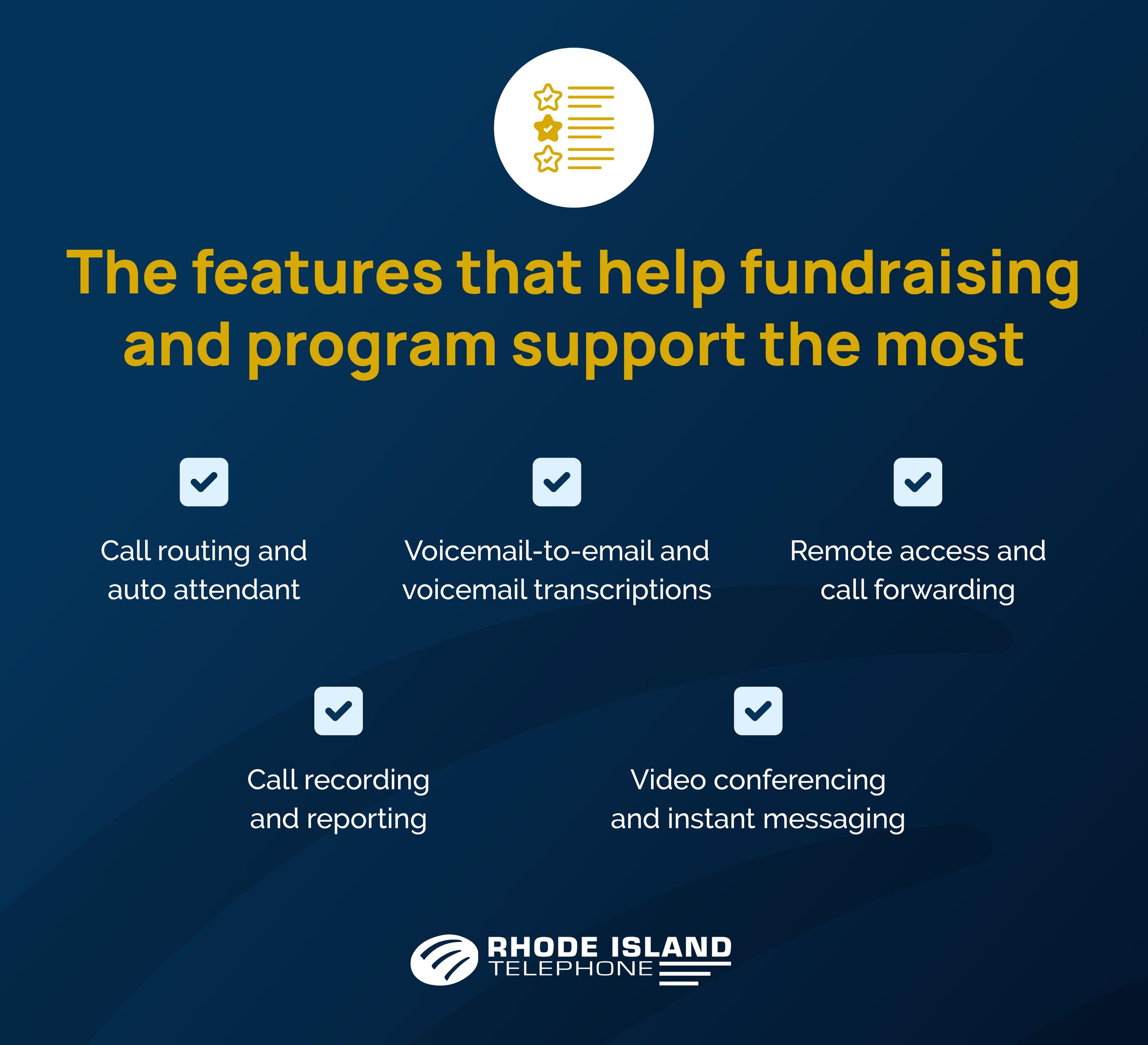
The features that help fundraising and program support the most
Call routing and auto attendant
A strong call routing setup and a simple auto attendant can keep callers from getting stuck in the wrong place. If someone wants to give, ask about events, or reach program staff, the system should be set up to move them fast and correctly.
This is a must-have feature in any phone system for fundraising. Good call flow means donors and volunteers spend less time waiting, and your team spends less time sorting out who should answer what.
Voicemail-to-email and voicemail transcriptions
When a team is stretched thin, voicemail-to-email helps a lot. Staff can read or hear messages without sitting by the phone all day. To take it to another level, voicemail transcriptions should be included because they help with faster follow-ups.
This is especially useful for nonprofits with one office line but several people sharing responsibility for donor and program calls.
Remote access and call forwarding
Nonprofits may have a physical location, but people are often moving around and don’t work from one office all week. There are events, site visits, meetings, and outreach work happening all over the community. That’s why remote access and call forwarding matter.
A modern VoIP phone lets a staff member take calls from almost anywhere while keeping the same business phone number. It helps teams stay connected without handing out personal cell numbers and confusing everyone on how they should contact the nonprofit.
Call recording and reporting
Not every organization needs call recording, but some do. It can help with training, quality checks, and better customer service when donors call back and need context.
Reporting also matters. You don’t need a giant dashboard like you’re a Wall Street trader. But it helps to see call volume, missed calls, response times, and where your call flow tends to break down. It’s about having insight and being able to make changes when needed.
Video conferencing and instant messaging
For some nonprofits, quick internal communication matters almost as much as outside calls. Instant messaging and video conferencing can help a team connect faster, especially when employees and volunteers are spread out.
At first glance, these may seem like luxuries, but they are the kind of advanced features that will absolutely help because they’re simple and easy to use. If anything makes the work harder, it’s time to reevaluate because it’s not helping.
What nonprofits should ask a provider
Not all VoIP service providers are the same. Some are easier to work with than others. When you compare a provider:
- Ask about the features offered, support, uptime, and how the VoIP service works when your office loses power.
- Ask whether the VoIP phone system can support unlimited users if your organization grows.
- Ask how easy it is to add a phone number, move a user, or update call routing.
- Ask what happens to your phone service during an outage.
- Ask about the upfront and ongoing pricing structure.
Nonprofits need clear costs, honest services, and a provider that understands tight budgets. The goal is to find the VoIP solution that fits your mission and your day-to-day work.
Old phone systems versus newer options
Here is the simple tradeoff:
- A traditional phone setup may feel familiar, but it often comes with more physical hardware, more surprise costs, and less flexibility.
- A VoIP system or hosted VoIP option often gives nonprofits better access, easier management, and more ways to connect with callers.
By no means is VoIP perfect. The main disadvantage usually comes back to the internet. If your internet connection goes down, your phone service can be affected too. That’s why reliability, a backup connection, and support matter so much when choosing a provider. Still, for many nonprofits, the upside is hard to ignore.
Where Rhode Island Telephone fits
At Rhode Island Telephone, we work with nonprofits that need a phone system that feels straightforward. We offer local support, practical services, and flexible options for organizations that need a better phone service setup without adding more stress.
For nonprofits comparing phone systems and providers, our non-profit VoIP phone system page is a great place to start. We’re a good fit for nonprofit organizations that want a provider that understands the community, respects the mission, and helps customers make sense of their options.
Good or Bad: How Your Nonprofit Communicates Will Have a Lasting Impact
At the end of the day, the right phone system should help nonprofits serve people better. It should help donors reach your team. It should help volunteers get answers. It should help your organization connect without extra confusion.
And it should do all of that without driving up costs.
For nonprofits trying to choose between sticking it out with a traditional phone setup and a newer VoIP service, the answer usually comes down to this: pick the system that helps your team stay connected, protect important calls, and support the mission every day. If you need help with what that looks like, then we can help with a no-obligation discussion. Contact us today to learn more.