A lot of businesses on the South Coast reach the same moment.
The traditional phone systems start acting up. Someone mentions “hosted VoIP,” and you head to Google. In seconds, a national provider’s name pops up with a. . .pretty reasonable price.
And that’s when the real question hits while comparing different providers: is the best pick a big-name platform, or a local team that can actually show up in New Bedford or Fall River if things get messy?
That’s what this guide is all about: figuring out what really matters when picking between a national or local VoIP provider Southeastern Massachusetts can count on.
National vs. Local VoIP Phone Service Providers: What South Coast Businesses Should Consider
If you’re in New Bedford, Dartmouth, or Swansea, the right phone system depends on how your business operates. A single-location boutique might need different features than a multi-site contractor or a clinic with a high call volume.
So, before you get locked into some big-box phone contract, here’s what to look at (and where a local VoIP provider can make all the difference).
Need a quick refresher on how Voice over Internet Protocol (VoIP) works? Check out our blog on the subject.
1. Price: Is the National Option Really Cheaper?
National providers often advertise low per-seat pricing. But those sticker prices don’t always include installation, training, or post-sale support. Once you factor in:
- Hardware costs
- Admin time to configure the system
- Support tickets that take days to resolve
- Additional fees for porting numbers or call recording
. . .the “cheap” option can start to add up.
A local VoIP provider may quote a slightly higher monthly rate upfront, but their cloud phone systems for small businesses often include full implementation, personalized onboarding, and more responsive service, allowing you to save money over time.
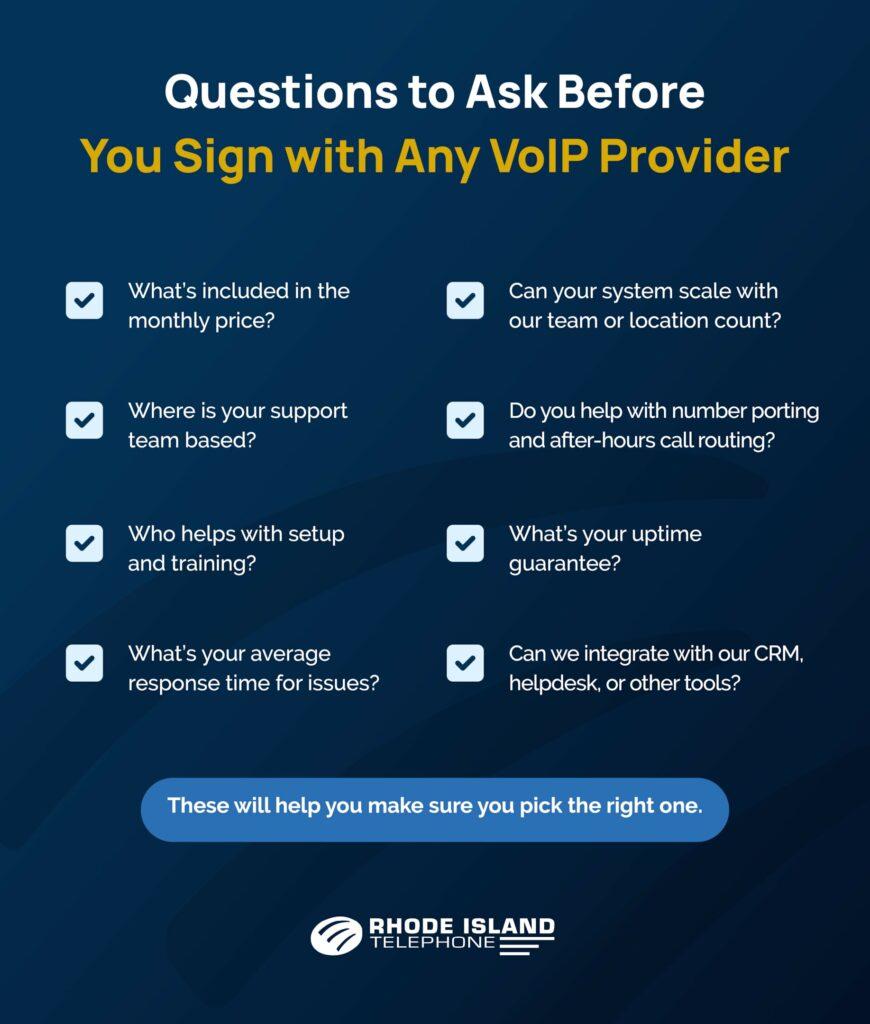
☑️ What to ask: Does your price include setup, number porting, and training?
2. Support: How Fast Can You Get Help When You Need It?
Here’s where national providers tend to struggle. If your phones go down or a feature breaks during your busy season, how long are you willing to wait?
Many Southeastern MA businesses (such as local medical clinics or customer-facing retailers) can’t afford extended downtime or back-and-forth with offshore support reps.
A local VoIP provider Southeastern Massachusetts will be more likely to:
- Answer your call fast
- Know your business setup
- Dispatch on-site help if needed
- Follow up proactively after the fix
☑️ What to ask: Where is your support team based, and what’s your average response time?
3. Reliability: What Happens When Something Breaks?
Cloud-based phone systems are generally reliable, but nothing’s perfect. When phone call quality dips or a network hiccup occurs, a national provider may shrug and blame your local high-speed internet connections.
A local provider, on the other hand, understands the infrastructure in your area and may even work directly with your ISP to resolve the issue.
Providers like Rhode Island Telephone are already serving businesses across the South Coast and know how to keep systems running strong in older mill buildings, multi-site warehouses, or rural offices.
☑️ What to ask: What’s your uptime guarantee, and how do you troubleshoot local outages?

4. Implementation: Who’s Handling Setup and Training for the VoIP Phone System?
Installing a cloud phone system isn’t just plug-and-play. There’s number porting, call routing rules, voicemail configuration, device provisioning, and more.
With a national provider, you’ll likely be handed a setup manual or a ticketing portal. If your team isn’t tech-savvy, that can slow things down and leave you with features you’re not using.
A local VoIP provider offers more hands-on guidance. That might include:
- In-person walkthroughs
- Live training sessions
- Setup of night mode or after-hours routing
- Custom call flows for seasonal hours or team rotation
☑️ What to ask: Will you help us configure call routing and train staff?
5. Flexibility: Can They Adapt to Your Business Changes?
South Coast Massachusetts businesses don’t always follow a set template. A construction company in Somerset might need temporary numbers for job sites. A Dartmouth dental clinic may want to add call recording for compliance. A Fairhaven seafood distributor might scale staff seasonally.
National VoIP providers aren’t always equipped to make fast changes.
A local provider, though, is more likely to tailor solutions around:
- Hybrid teams
- Seasonal staffing
- Multi-location operations
- Integration with your other business tools
☑️ What to ask: Can your system support remote staff, multiple devices, and growth over time?
6. Accountability: Who’s Really Responsible?
Here’s what many business owners don’t realize: with a national provider, you’re often the admin. You file support tickets. You troubleshoot. You spend time trying to connect the dots between your system, your provider, and your IT team.
With a local partner like Rhode Island Telephone, you get a team that knows your setup and follows through. If something breaks, they don’t just point fingers. They show up, solve it, and make sure it doesn’t happen again.
☑️ What to ask: What happens when something isn’t working? Who owns the fix?
Once you’ve asked and answered these questions, you’ll know which provider is the best (and the most cost-effective) option for you and your team.
Just Want the Quick Version of Our VoIP Provider Comparison? Here You Go:
Pressed for time? No problem. Here’s the short and sweet breakdown of when to go national and when local makes more sense.
1) When a National VoIP Provider is Good Enough.
The big guys can get the job done if your business:
- Only needs a few lines
- Doesn’t require special call routing
- Has someone in-house who can handle admin and setup
- Doesn’t mind waiting a few days for support
That’s when a national VoIP provider might do the trick for your new phone system. Just make sure you know what you’re signing up for.
2) When Local is the Better Call.
A local VoIP provider in Southeastern Massachusetts makes sense if you:
- Don’t have time to be your own tech support
- Need a system that’s built for how your team works
- Want better call quality, flexibility, and follow-through
- Expect fast, human support when it matters most
Whether you’re replacing traditional phone services or upgrading a legacy PBX, a local provider brings peace of mind and fewer surprises.
Bottom Line: Pick the Partner, Not Just the Platform
At the end of the day, your phone system is the lifeline between your business and your customers. You don’t want to be stuck managing it solo, or worse, down for hours with no help in sight.
If you’re based in South Coast, MA, and want a VoIP provider that’s easy to reach, knows the area, and actually works with you, it might be time to consider going local.
Ready to talk about what that could look like for your business? Request a quote from our team Rhode Island Telephone today!